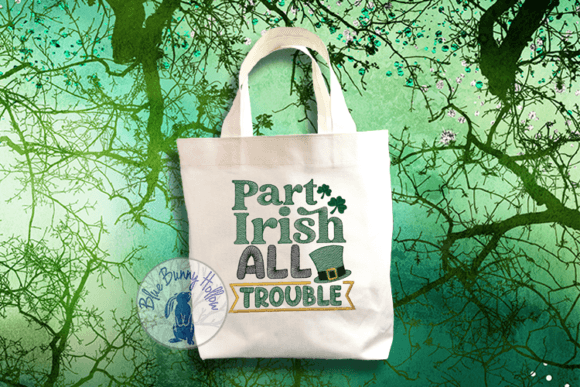
Reviewing Part Irish All Trouble for Craft Fairs
As an embroidery designer who has spent countless hours behind the hoop and even more time standing behind a booth table at weekend markets, I know that not every design translates into a bestseller. When I first loaded the Part Irish All Trouble machine embroidery design onto my digitizing software, my immediate reaction was one of cautious optimism. For those of us selling handmade products, especially during the high-pressure St Patrick S Day season, we need designs that do more than just look cute on a screen. They need to stop traffic in a crowded aisle.
This review breaks down how this specific Embroidery asset performs in the real world, focusing on its viability as a craft fair product and its potential for your small shop product line.
First Impressions: Bold, Playful, and Market-Ready
The title alone tells you everything you need to know about the vibe. "Part Irish All Trouble" is not trying to be elegant or minimal. It is bold, funny, and unapologetically festive. In a sea of generic four-leaf clovers, this design offers personality. The description promises a medley of shamrocks and the iconic leprechaun, which suggests a composition that is likely dense with character rather than sparse and modern.
For an Etsy seller or boutique maker, this is gold. Customers at craft fairs are often looking for items that make them smile or serve as conversation starters. A design that leans into the "mischievous" angle stands out against the typical pastel-heavy spring displays. It feels rustic yet polished, making it versatile enough for both farmhouse-style decor and casual wearable accessories.
Product Versatility: Where This Design Shines
When preparing my booth display, I always ask: where does this design have the most impact? Based on the thematic elements, here is how Part Irish All Trouble performs across different mediums.
- Tote Bag Design: This is arguably the strongest application. A natural canvas tote with this design centered creates an instant statement piece. The larger surface area allows the details of the leprechaun and shamrocks to breathe, ensuring the stitch density does not overwhelm the fabric.
- Apron Embroidery: Kitchenware sells incredibly well during holiday seasons. Placing this design on the bib of a sturdy cotton apron turns a utilitarian item into a giftable handmade product. It appeals to the hostess who wants to show off her spirit while cooking.
- Tea Towel Embroidery: While popular, tea towels require caution. If the design includes fine lettering, it may get lost in the terry cloth texture. I recommend using a waffle weave or smooth linen towel for better clarity.
- Embroidered Patch: If the digital embroidery file is scalable, turning this into an iron-on or sew-on patch is a brilliant move for low-cost impulse buys. Patches allow customers to customize their own jackets or bags, increasing engagement.
- Caps and Hats: Curved surfaces are tricky. If the design is wide, it might distort on a standard baseball cap. However, if the composition is compact, it works beautifully on the front panel, offering a premium look.
Production Practicality for the Small Shop Owner
As creative entrepreneurs, we must balance aesthetics with efficiency. A design that takes three hours to stitch and requires constant thread trimming is not sustainable for batch production. Here is what I look for when evaluating Part Irish All Trouble for commercial embroidery purposes.
Visual Clarity at a Glance: The phrase "Part Irish All Trouble" needs to be legible from at least three feet away. If you are setting up a booth, customers walk by quickly. If the font is too script-heavy or thin, it fails the "walk-by test." Ensure the thread colors contrast sharply with the fabric. A dark green or black thread on a white tote is far more effective than light green on cream.
Photography and Online Listings: For your Etsy listings, this design photographs well because it likely features distinct shapes (shamrocks, hats) that create interesting shadows and textures under natural light. Create at least one printable mockup to visualize how the stitch direction catches the light. High-quality images of the finished product can significantly boost buyer engagement.
Batch Production Potential: Is the design repeatable? If the stitch count is moderate, you can run multiple hoops in a day. Check the stitch density in your software. High-density areas can cause puckering, especially on lighter fabrics like tea towels. Using the right stabilizer is non-negotiable here. A cut-away stabilizer is often safer for garments that will be washed frequently, ensuring the design remains crisp over time.
Careful-Use Notes and Technical Considerations
Before you commit to producing fifty units, there are technical hurdles to clear. Since the exact stitch count and file format are not provided in the brief description, you must check these details in the download package before production.
- Fabric Texture: Textured towels or thick denim can swallow small details. If the leprechaun’s face or small shamrock veins are tiny, they may not register on rough fabrics. Test the design on scrap fabric that matches your final product material.
- Dark Fabric Challenges: If you plan to sell on navy or black items, ensure the design includes underlay stitches that prevent the background fabric from peeking through. You may need to adjust thread colors to brighter greens and whites to maintain visibility.
- Hoop Size Constraints: Confirm the required hoop size. If the design is large, you might need a 5x7 or 6x10 hoop. Smaller 4x4 hoops might require splitting the design, which is rarely worth the extra labor for a single motif.
- Commercial Licensing: Always confirm commercial licensing before selling finished products. Most designers allow physical sales but restrict the redistribution of the digital embroidery file itself. Respect these terms to protect your business reputation.
Enhancing Brand Consistency and Booth Appeal
Using Part Irish All Trouble strategically can strengthen your brand identity. If your shop focuses on whimsical, high-quality handmade goods, this design fits perfectly. It signals to customers that you understand humor and trends.
In a booth setting, use this design as an anchor. Place an embroidered pillow cover or a large market bag featuring this motif at eye level. It draws attention and invites customers to look closer at your other items. The playful nature of the design encourages interaction; customers are more likely to pick up an item that makes them chuckle.
Furthermore, consider creating design assets that complement this piece. Pair it with simpler, solid-color items to let the embroidery pop. This contrast highlights the quality of your stitch work and elevates the perceived value of the finished product.
Final Verdict for the Seasonal Seller
For the upcoming St Patrick S Day rush, Part Irish All Trouble is a strong contender for your product lineup. It moves beyond the cliché and offers a narrative that customers want to wear and display. By testing on appropriate fabrics, managing stitch density, and leveraging its bold aesthetic in your marketing, you can turn this digital file into a tangible revenue stream.
Remember, the key to success with any machine embroidery design is not just the art, but the execution. Check your tension, choose your stabilizer wisely, and present your handmade product with confidence. This design has the potential to be a standout star in your craft fair rotation if treated with the professional care it deserves.